As a landscape photographer who earns his living chasing light and capturing wild places, Mark Metternich has distilled what he considers his top five tips into something a little different—less about gear and more about heart, vision and exploration. He emphasises photography as an adventure, not a checklist. Here’s a fresh take on his insights.
1. Venture Beyond the Usual
“Don’t go where the path may lead; go instead where there is no path and leave a trail.” — Ralph Waldo Emerson
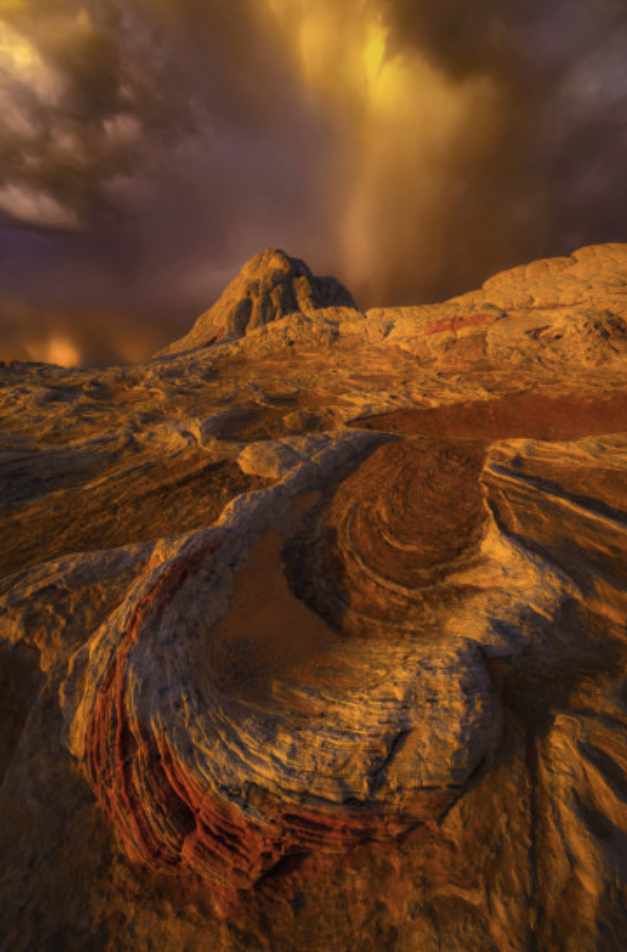
Metternich begins by challenging us to step off the well‑worn tracks of popular landscape photo locations. He loves the icons as much as anyone, but he gets more excited about discovering places that few others have seen. He spends countless hours on Google Earth, exploring remote roads, hiking without a plan, simply because he believes new scenes still await. Even in a region as well‑photographed as the American Southwest, he recently found five fresh formations no one else seemed to have captured. In short: originality matters. If you’re always photographing the exact same viewpoints, you’ll struggle to stand out. Research, wander, and be open to something uncharted.
2. Let Passion Lead
Metternich emphasises passion not as a bonus, but as the very engine of creative photography. He asks: What truly lights your heart on fire? What compels you to pick up your camera? He shares a deeply personal anecdote: after being bedridden for two months with no clear diagnosis, he grappled with his mortality, his purpose and what his future would look like. During that time, his purpose deepened—he realised that photography, at its core, must come from something more than “nice pictures”. He encourages you to dig inward: not just where you’re going, but why. Your strongest work will emerge when you align your art with what genuinely moves you.
3. Embrace the Experience, Not Just the Shot
It’s easy to fall into the trap of “stamp‑collecting” landscapes—visiting a famous place, clicking the shutter, moving on. Metternich warns against that. He tells of a photographer friend who travelled to Iceland and Greenland, captured incredible images—but more importantly, she encountered people, land, culture and meaning. He suggests that the adventure, the connection, the immersion are what truly shape our photography and our lives. So: slow down. Look around. Be present. Your best image might come when you forget the camera and simply see.
4. Don’t Neglect Post‑Processing
Once you’ve captured your images, the work isn’t over. Metternich notes that many photographers overlook the “other side” of creativity: post‑processing. He runs workshops and even dedicates extra days just for this. Why? Because without harnessing that phase, your images may fall short of their potential. He distinguishes between processing for the web and processing for fine‑art prints—they require different mindsets and skills. His advice: follow tutorials, invest in learning, even if you’re already experienced. One‑on‑one lessons, screen‑sharing sessions, repeated viewing of instructionals—these are how he stays sharp after 15 + years in the field.
5. Experiment with Ultra‑Wide Lenses
Finally, the gear tip: try going wide—dramatically wide. Metternich has embraced extreme angles: for example, shooting at 11 mm on full‑frame, or a 10 mm rectilinear lens. Why? Because radical perspectives energise him. He enjoys flaring skies, exaggerated lead‑in lines, distortion even. Straight lines may bend—but if you’re doing art, he asks, “who cares?” He encourages free‑form shooting: ditch the tripod at times, get low, get high, move an inch and see how the scene changes. Breaking the rules can lead to images that feel fresh and alive.
In Closing
So here’s the message: seek out new ground, let passion guide you, immerse yourself in the journey, elevate your editing, and give bold gear a chance. As Metternich puts it: go beyond the comfortable. Break the rules. And don’t fear failing. Because even if a photo doesn’t turn out how you hoped, the experience—and what you learn—can carry you further.
If you’re serious about landscape photography, let these five pillars guide you—not as a rigid prescription, but as starting points for your own creative path.