In the world of landscape photography, it’s easy to fall into the habit of chasing iconic places — the famed landmarks, the “must‑shoot” vistas, the bucket‑list sites that promise instant awe. But what if the real creative power lies not in the specific location, but in our deeper engagement with land and nature? That’s the subtle yet significant shift advocated by Erin Babnik in her essay “Looking Beyond Locations in Landscape Photography.”
Location as a Limiting Focus
Babnik begins by highlighting how the landscape‑photography genre often revolves around place names. We accumulate location galleries, revisit recognized viewpoints, and seek to “check off” famous scenes. She argues that while those spots may be visually compelling, an over‑reliance on location can undercut creativity. When we fixate on the landmark, we may overlook alternative perspectives — for example, those subtle opportunities that emerge when weather, light or context change. In one story she shares, a crowd of photographers remained glued to a tripod setup under unfavorable conditions and missed a richer, more evocative scene just a short walk away.
By contrast, when our focus shifts from the location’s fame to our personal relationship with the land, we open up new possibilities — not merely capturing a place, but exploring meaning, mood, and interpretation. Babnik cautions that treating locations as commodities for collection (in effect “tick‑the‑box” tourism) encourages over‑visitation, environmental stress and a transactional relationship with nature rather than a creative or reverential one.
What Makes a Landscape?
Next she explores the concept of “landscape” itself — and argues that it’s not simply a geographic coordinate or a photo‑worthy vista. A landscape is, in fact, a mental construct: a space imbued with ideas, memories, moods and associations. It might be a sweeping panorama or it might be a quiet macro study of a moss‑covered rock. The genre invites interpretation — and in so doing offers a stage for universal feelings like wonder, fragility or transformation.
Babnik cites the British photographer John Blakemore, who later in life began photographing views within his own home and called them “domestic landscapes.” The point: the genre isn’t restricted to grand scenery and remote national‑park iconography. The power lies in what the image suggests, not just what it shows.
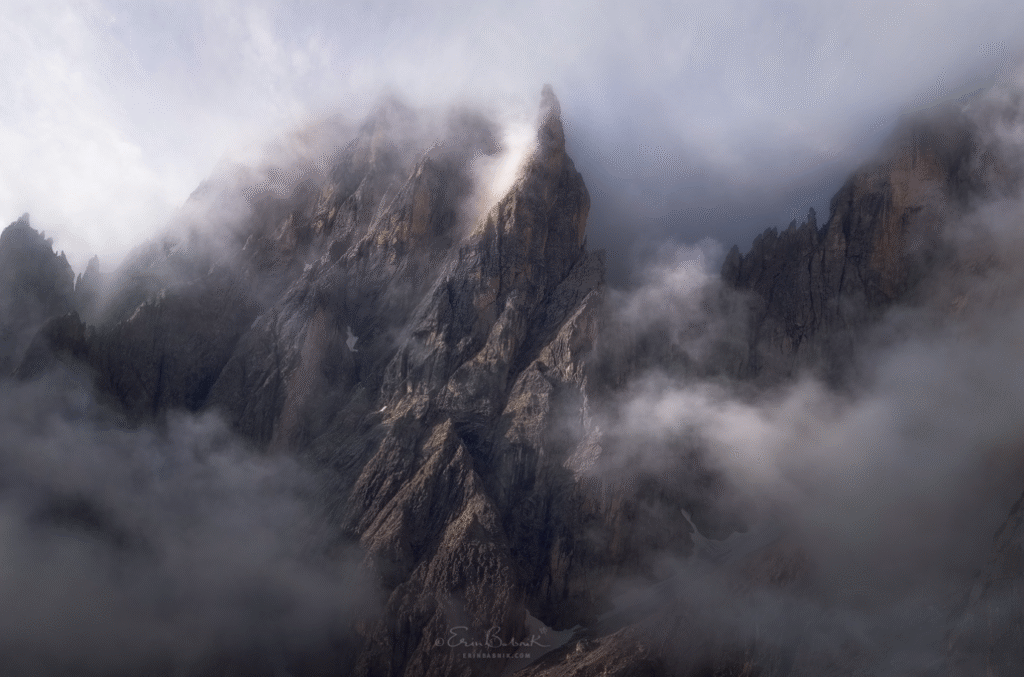
Seven Practical Ways to Shift Your Focus
Finally, Babnik offers seven hands‑on tips for cultivating photographs that speak beyond “place.” Here’s a distilled version:
- Embrace the imperceptible. Seek scenes where atmosphere, subtle light, darkness, or framing create mystery or mood — even when the location is unrecognizable.
- Embrace the unpredictable. Work in environments defined by change (storms, dunes, shifting light) where the obvious vantage doesn’t dominate — and where your personal response matters.
- Explore further. Rather than revisiting the famous site, wander into lesser‑known places — even a roadside pull‑out or a tiny unnamed spot can yield rich discovery.
- Start with the light rather than the landmark. Let the light guide you; find where interesting light is happening and then build the composition, rather than beginning with the landmark and waiting for “good light.”
- Bring language into play. As you observe, think of words or phrases that capture your reaction — potential titles, feelings, metaphors. This vocabulary can enrich your visual thinking.
- Give some thought to your titles. A title needn’t be the name of the place. A metaphorical or poetic title invites viewers to engage beyond geography.
- Consider organizing your work by theme rather than location. Create collections linked by idea, mood or experience instead of grouping by region or famous destination.
Why It Matters
By shifting our orientation from “location” to “landscape,” we’re choosing creativity over checklist‑tourism, story over status. When a photograph is grounded in what the place means — to us and potentially to others — it becomes something more: a collaboration between the photographer, the land and the viewer. It moves beyond a static “Here’s where I was” snapshot and becomes an expressive, personal vision.
Moreover, this shift has relevance for conservation and ethical visitation. When we valorize places purely as destinations, we inadvertently feed over‑visitation, a fragile environment and a transactional mindset. But when we value the experience, the relationship and the meaning of the land — whether at a famed national park or a modest unnamed spot — we encourage awareness, respect and deeper engagement.
In Practice
So next time you head out with your camera, consider this: instead of rushing toward the iconic viewpoint, ask yourself what the light is doing at that moment. What makes you pause? What idea or feeling is surfacing? What alternative view are you not noticing because the “classic” one has framed your mind? And when you later title or present the image, think about how you might invite the viewer into something beyond place — into mood, metaphor, imagination.
By doing so, you’re not just photographing a famous spot, you’re creating a visual expression of your own encounter with nature. And that, Babnik suggests, is where the heart of landscape photography truly lies.